




Key Takeaways
- Modern AC condensers are engineered for year-round outdoor exposure — no cover required in summer
- Covering your AC unit in summer traps heat, moisture, and pests — creating the exact problems you're trying to prevent
- Covering a running or standby unit can burn out the motor or compressor
- In winter, only use a breathable top-only cover — never a solid tarp or plastic
- The best protection is annual maintenance, not a cover
- If you do need a cover for off-season storage, choose a breathable, purpose-built AC cover

Introduction
Here's a question almost every homeowner asks at some point: "Shouldn't I cover my AC unit to protect it from the summer heat, UV rays, and all that debris flying around?" It feels like the responsible thing to do — the same way you'd cover your patio furniture or grill when it's not in use. And honestly? That instinct makes complete sense.
But here's what HVAC professionals and manufacturers consistently say: covering your AC unit in summer is one of those well-meaning habits that can actually backfire. If you're wondering whether you should cover your AC unit in summer, the short answer is no — and for some very good reasons. Modern air conditioning condensers are specifically engineered to live outdoors, year-round, in all conditions. Covering them doesn't protect them. It puts them at risk.
Let's break down exactly why.
Are AC Units Designed to Be Left Outside?
Yes — completely and by design. Outdoor AC condenser units are built from weather-resistant materials, including galvanized steel housings, UV-stabilized polymer components, and corrosion-resistant coatings engineered to handle decades of sun, rain, wind, heat, and humidity without degrading.
Major manufacturers like Carrier, Trane, and Lennox design their condensers with permanent outdoor installation in mind. These are not fragile appliances that need extra protection — they're industrial-grade equipment built to operate through extreme conditions across all four seasons.
One important point most homeowners don't realize: covering your unit in ways not specified by the manufacturer can potentially void your warranty. Always check your unit's documentation before adding any aftermarket accessories. If your unit is under warranty, protecting that coverage is far more valuable than any perceived benefit a cover might offer.
Does Covering Your AC Unit Help in Summer?
This is one of the most common questions homeowners search for — and the answer is more nuanced than a simple yes or no.

What Homeowners Think It Does
The reasoning seems logical on the surface. A cover should:
- Shield the unit from harsh UV rays that degrade materials over time
- Block bird droppings, tree sap, and airborne debris from collecting inside
- Protect against summer storm damage from branches or hail
- Keep the interior cleaner between uses
These are all genuine concerns. The issue is that a solid cover doesn't actually solve them — and creates new problems in the process.
What It Actually Does
When you wrap a solid cover around your AC condenser in summer, here's what happens inside:
- Heat builds up rapidly, since there's nowhere for warmth to escape
- The natural airflow the unit relies on — even when idle — is completely cut off
- Condensation forms inside the cover and has nowhere to evaporate
- That trapped moisture creates a warm, dark, humid environment that is ideal for mold, mildew, and bacterial growth on the coils and internal housing
In other words, the cover creates the exact conditions you were trying to prevent. And if someone turns the unit on while it's still covered — say, during an unexpected heat wave — the consequences can be severe.
Risks of Covering Your AC Unit in Summer
Let's get specific about what can go wrong, because these aren't minor inconveniences — they're potentially costly repairs.
Moisture and Mold Buildup
Without airflow, condensation trapped beneath a cover has nowhere to go. Over time, this persistent moisture causes mold and mildew to grow directly on the evaporator coils, the fan blades, and the interior housing walls. Mold on AC coils isn't just an efficiency problem — it degrades air quality throughout your home and requires professional coil cleaning or, in severe cases, full coil replacement. That's a repair that can run several hundred to over a thousand dollars depending on your unit.
Pest Infestation
Covered AC units are extremely attractive to pests. Rodents, birds, wasps, and insects actively seek out dark, sheltered spaces — and a covered condenser is perfect real estate. Once inside, rodents chew through wiring insulation, birds build nests in the fan assembly, and insects establish colonies in tight spaces. Pest-related damage is one of the leading causes of premature AC failure and is often not covered by standard HVAC warranties.
Airflow Blockage
Even when your AC isn't actively running, the unit needs to breathe. Air circulation prevents internal humidity buildup, keeps components from overheating in standby mode, and helps the unit regulate temperature naturally. A sealed cover eliminates that airflow entirely, gradually degrading internal components over the course of a summer.
Accidental Operation Risk
This is perhaps the most serious risk. If your AC unit gets covered — by you, a family member, or even a contractor — and is then switched on without removing the cover first, the motor is forced to pull air through a blocked intake. This creates immediate overheating. In the worst cases, it can burn out the compressor — the single most expensive component in your system, often costing $1,500–$2,500 or more to replace.

When Is It OK to Cover an AC Unit?
There is one legitimate use case for AC covers: winter storage in specific climates.
If you live in a region that gets heavy snowfall, prolonged ice storms, or significant freezing precipitation, a properly selected cover applied during the off-season can help protect against ice dams forming on top of the unit and debris accumulation during months when the AC won't run at all.
Even then, the rules are strict:
- Use only breathable, mesh-style covers — never solid tarps, plastic sheeting, or weatherproof vinyl that seals out all airflow
- Cover only the top of the unit, not the sides — airflow must remain possible around the condenser
- Never cover a heat pump — heat pumps run year-round, including in winter, and covering them is always dangerous
- Remove the cover completely before your first spring startup, without exception
If you're looking for a winter cover that meets these standards, Aoodor's outside AC unit cover is designed specifically for breathable, off-season protection — not summer use. You can also browse their full range of patio furniture covers for protecting other outdoor equipment the right way.
What You Should Do Instead of Covering Your AC in Summer
If you want to genuinely protect your investment and keep your system running efficiently all summer long, here's where to put your energy.
Clear the Area Around the Unit
Good airflow starts with a clean perimeter. Make it a habit to:
- Remove leaves, grass clippings, mulch, and any debris within at least 2 feet of the unit on all sides
- Trim back shrubs, hedges, and vegetation that may be crowding the condenser
- Check after storms for fallen branches or buildup that could block airflow
This simple, free step does more for your AC's health than any cover.
Schedule Annual Professional Maintenance
A pre-season tune-up before the summer cooling season is the single best investment you can make in your AC system. A qualified HVAC technician will:
- Clean the condenser coils professionally
- Check and top off refrigerant levels if needed
- Inspect and tighten electrical connections and wiring
- Test capacitors, contactors, and the motor
- Catch small problems before they become expensive failures
This is how you protect your unit — not with a cover.

Install a Shade Structure (Optional)
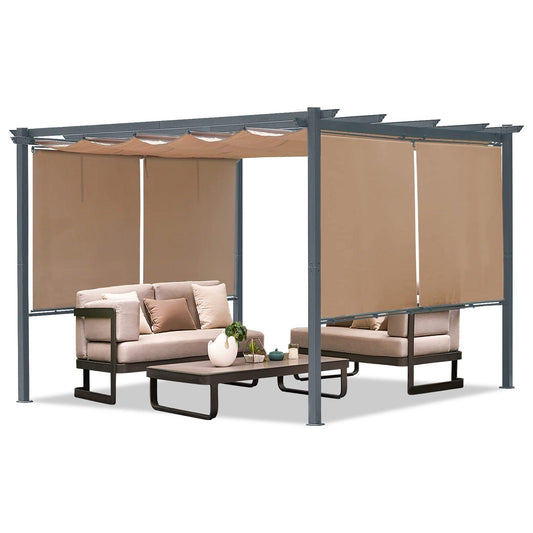
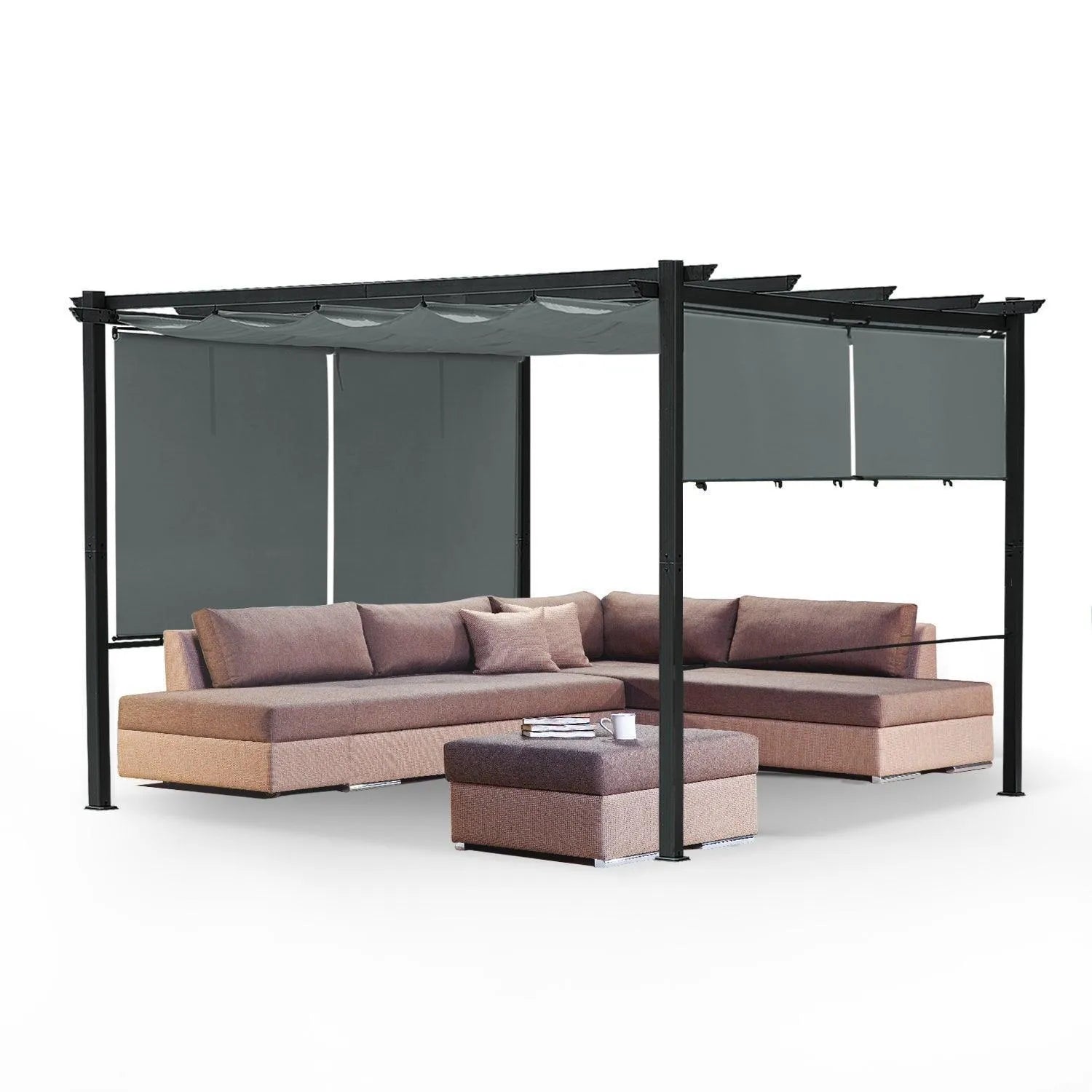
This one surprises people: a shade structure or pergola positioned above (not around) your outdoor condenser can actually improve efficiency by roughly 5–10% by reducing heat absorption on the unit's surface. The key word is above — the sides must remain completely open for airflow. Blocking the sides, even partially, negates any efficiency benefit and creates the same airflow problems as a cover.
If you're exploring outdoor structure options, Aoodor's patio furniture collection includes shade solutions designed with proper airflow in mind.
Use a Top-Only Debris Cover During Storms
If a major storm is approaching and you're worried about large debris like branches or hail, a purpose-built top-only debris guard — made from breathable mesh or open-weave material — can offer temporary protection without sealing the unit. Remove it as soon as the storm passes.

Frequently Asked Questions
Should I cover my AC unit in the summer?
No. Modern AC condensers are fully weatherproof and designed for permanent outdoor exposure. Covering your unit in summer traps heat, moisture, and pests — causing far more harm than the elements would on their own.
Does covering your AC unit help in summer?
No — it actively hurts performance and longevity. A cover restricts the airflow your unit needs even in standby mode, traps condensation, and creates conditions ideal for mold growth and pest infestation.
What if I'm going on vacation for a month?
No cover needed. Simply set your thermostat to 78–80°F so the system runs minimally to control humidity. Your unit is designed to handle weeks of outdoor exposure without any intervention.
Is it OK to cover just the top of the unit in summer?
In summer, no — even a partial top cover can restrict ventilation and trap moisture. In winter, a breathable top-only cover is acceptable if you're in a heavy snowfall region and the unit will not be running.
Will covering my AC void the warranty?
It can. Some manufacturers specify in their warranty terms that improper accessories or modifications — including non-approved covers — may void coverage. Always review your documentation before adding a cover of any kind.
Conclusion
The verdict is clear: covering your AC unit in summer does more harm than good. These systems are built specifically for outdoor, year-round exposure — they don't need your help surviving the summer. What they do need is regular maintenance, clean airflow, and a clear perimeter.
If you've been covering your unit every summer out of habit, now is a great time to stop. Skip the cover, book a professional tune-up, and clear the area around the condenser. That's the real protection your system needs.
And if winter is coming and you do want a cover for off-season use, make sure you choose the right one. Visit Aoodorshop.com to find breathable, purpose-built AC covers designed for safe off-season storage — and explore their full range of outdoor protection products while you're there. When it comes to whether you should cover your AC unit in summer, the answer from every HVAC professional is the same: let it breathe.

